Practical Virus Bacteria Vector Illustrations for Designers
Understanding the Visual Language of Pathogens
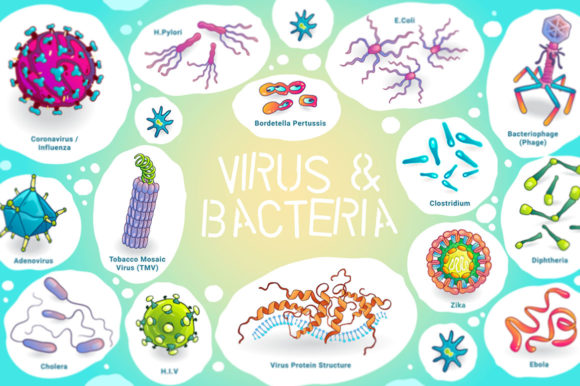
When you are working on a project related to healthcare, science, or education, finding the right imagery is often the hardest part of the process. You need assets that look professional, scientifically plausible, and stylistically versatile. This is exactly where a high-quality package of Virus Bacteria Vector Illustrations proves its value. Unlike generic stock photos, these vector illustrations offer a specific kind of flexibility that modern digital projects demand. They are designed to look accurate enough for medical contexts but stylized enough to fit into sleek marketing materials or educational infographics.
The personality of these illustrations usually balances between scientific realism and graphic clarity. You won't find overly abstract shapes that look nothing like actual pathogens, nor will you find microscopic photography that is too complex for small screens. Instead, the visual style focuses on recognizable structures—spikes, capsules, and flagella—rendered with clean lines and balanced color palettes. This makes them suitable for a wide range of applications, from a serious corporate medical report to a vibrant poster for a pharmacy. The "appeal" lies in this neutrality; the graphics act as a neutral yet informative canvas that supports your text rather than overwhelming it.
Why Vector EPS 10 is the Industry Standard
The core of this package is the Vector EPS 10 format. If you have been in the design industry for a while, you know that EPS is a workhorse format, but version 10 is particularly important. It ensures backward compatibility with almost all major vector editing software, including older versions of Adobe Illustrator and CorelDRAW. This means you aren't restricted to the very latest software subscription to use these assets.
Working with vectors means you have infinite scalability. You can take a single virus icon and scale it up to the size of a billboard for a hospital campaign, or scale it down to a tiny favicon for a medical blog, and the edges will remain perfectly crisp. There is no pixelation. For a designer, this is non-negotiable. You can also easily edit the anchor points and paths. If a client decides they want the bacteria to look slightly more aggressive or perhaps change the color scheme to match their specific brand identity, you can do that in seconds without redrawing the asset from scratch.
High-Resolution PNGs for Immediate Use
While vectors are essential for professional print and logo design, not everyone has access to Adobe Illustrator, nor does every project require it. This is why the inclusion of High-Resolution transparent PNG files is a significant practical advantage. These files are "plug-and-play." Whether you are a content creator assembling a quick social media post, a teacher creating a worksheet in Microsoft Word, or a blogger inserting an image into a CMS, the PNGs work immediately.
The transparent background is the critical feature here. It allows the virus and bacteria illustrations to be placed over any background color, texture, or photograph without the awkward white box that ruins the composition of a design. This is particularly useful for social media graphics where background colors change frequently based on campaign themes. The high resolution ensures that even if you crop into the image, the details remain sharp, maintaining the professionalism of your visual content.
Integrating Biological Assets into Brand Identity
It might seem strange to talk about "brand identity" when discussing biological illustrations, but for health-tech startups, pharmaceutical companies, and wellness blogs, visual consistency is key. Using these Virus Bacteria Vector Illustrations allows a brand to establish a recognizable visual language. If you are a content creator in the health niche, consistently using a specific style of illustration helps your audience recognize your content instantly in a crowded feed.
Consider the difference between using a random stock photo of a doctor versus a clean, vector-based illustration of a virus. The vector illustration feels more modern, more designed, and often more "tech-forward." It signals that the brand cares about design quality. This consistency builds trust. When your packaging design, web design, and social media graphics all share the same high-quality vector aesthetic, it elevates the perceived value of your service or product. It moves you away from looking like a hobbyist and toward looking like an established publisher or enterprise.
Practical Applications Across Industries
The utility of this package extends far beyond just "medical" websites. Here is how different professionals can leverage these assets:
- Editorial Design and Publishing: For bloggers and publishers writing about flu season, hygiene, or biology, these illustrations break up large blocks of text. They provide visual hierarchy, guiding the reader's eye through the article and making complex biological topics feel more accessible.
- Packaging Design: Imagine a line of hand sanitizers or disinfectants. Using a subtle, watermark-style virus vector in the background of the label can communicate the product's purpose immediately without needing a paragraph of text. It creates a clean, clinical look that consumers associate with effectiveness.
- Educational Materials: Teachers and course creators can use these vectors to create diagrams. Because the files are separated, you can isolate specific bacteria to label their parts, creating custom educational infographics that are far superior to standard textbook images.
- Corporate Presentations: If you are pitching a health service or a biotech product to investors, generic clip art looks unprofessional. High-quality vector illustrations demonstrate attention to detail and seriousness about the subject matter.
Evaluating Fit and Readability
When incorporating these illustrations into your work, you must consider how they interact with your typography. This is where understanding your typeface choices becomes vital. If your brand uses a heavy, bold display font, you want to ensure the illustration doesn't compete with the text for attention. In this case, using the virus illustration as a background element with reduced opacity is a smart strategy.
Conversely, if you are using a clean sans serif font for body copy, a detailed illustration next to it can add necessary visual weight to the layout. It is about balance. Avoid placing complex, spiky virus illustrations directly behind text in a way that makes the words hard to read. Legibility always trumps decoration. Use the illustrations in margins, headers, or as section dividers to maintain a professional flow.
File Management and Workflow Efficiency
The inclusion of a Readme File is often overlooked by buyers, but it is a hallmark of a professional design assets package. Good assets come with instructions. This file typically details the exact software compatibility, the license agreement (crucial for commercial font and asset usage), and sometimes tips on how to best edit the files.
For entrepreneurs and small business owners, time is money. Having a package that includes both EPS and PNG formats saves you the conversion time. You don't need to worry about exporting settings or resolution loss. You simply drag the file you need into your project. This efficiency is what separates a smooth design workflow from a frustrating one. It allows you to focus on the message of your content rather than wrestling with file formats.
Ultimately, Virus Bacteria Vector Illustrations are not just pictures of germs; they are versatile design assets that solve specific visual communication problems. Whether you are crafting a brand identity for a clinic or illustrating a blog post, the combination of editable vectors and ready-to-use PNGs provides a robust toolkit for any creative professional. They bridge the gap between scientific accuracy and graphic design utility, ensuring your projects look polished, credible, and engaging.