Wild Flowers Watercolor Illustrations: A Fresh Take on Floral Design Assets
There is a distinct shift happening in digital design right now. We are moving away from rigid, geometric minimalism toward something more organic, tactile, and emotional. At the forefront of this movement are high-quality design assets that mimic traditional media, specifically Wild Flowers Watercolor Illustrations. These are not just generic stock images; they represent a sophisticated blend of artistic expression and digital utility. For designers, entrepreneurs, and content creators, these assets offer a way to infuse projects with a sense of authenticity that vector graphics often struggle to achieve. The appeal lies in their imperfection—the bleed of the paint, the grain of the paper, and the spontaneous flow of color that defines the watercolor medium.
The Anatomy of the Aesthetic
When we talk about Wild Flowers Watercolor Illustrations, we are discussing a specific visual language. Unlike the hyper-realistic floral photography of the past, these illustrations capture the essence of a flower rather than a botanical diagram. The visual characteristics are defined by soft edges, translucent layering, and a color palette that feels hand-mixed. This style carries a personality that is gentle, romantic, and approachable, yet it maintains a level of professionalism when executed correctly.
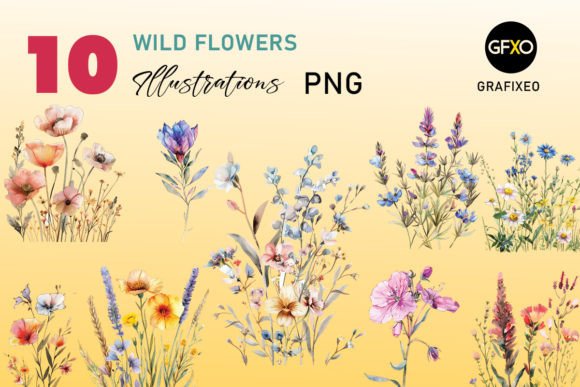
The "wild" aspect is crucial here. These aren't stiff, symmetrical roses in a vase. They are loose, flowing arrangements of poppies, daisies, lavender, and ferns. This organic randomness is a strategic advantage in modern typography and layout design. It allows the elements to weave around text or serve as a background texture without overwhelming the central message. The overall appeal is one of warmth and creativity, making it an ideal choice for projects that need to feel personal and human-centric.
Strategic Applications: Where These Assets Shine
The versatility of the Wild Flowers Watercolor Clipart set makes it a powerhouse for various industries. However, understanding where to deploy them for maximum impact is key to a successful design strategy.
For those in the brand identity space, particularly for lifestyle brands, wellness coaches, or artisanal goods, these illustrations are invaluable. They can serve as the cornerstone of a visual system, providing a consistent texture that softens the corporate edge. When used in packaging design, watercolor florals instantly communicate "handmade" or "natural," influencing customer perception before they even read the label. It is a subtle psychological trigger that aligns the product with purity and care.
In the realm of editorial design and web design, these assets solve the problem of visual fatigue. A blog post or magazine layout can feel sterile with text alone. Integrating a watercolor element as a header background or a sidebar accent breaks up the monotony and guides the reader's eye. For social media graphics, where attention spans are short, the vibrant, organic nature of these illustrations stops the scroll. They are perfect for creating cohesive Instagram aesthetics or Pinterest pins that stand out in a sea of flat colors and bold sans-serifs.
Integrating with Modern Typography
One of the most common questions regarding floral assets is how to handle font pairing. The goal is contrast without conflict. Because Wild Flowers Watercolor Illustrations are inherently organic and detailed, they pair best with typefaces that offer structure.
- Sans Serif Fonts: A clean, geometric sans serif font provides the perfect counterbalance to the fluid nature of watercolor. The sharp lines of the text ensure readability while allowing the floral elements to remain the artistic focal point.
- Serif Fonts: For a more traditional, editorial look, a classic serif font can add a layer of elegance. This combination works well for wedding invitations or high-end lifestyle branding where a sense of heritage is desired.
- Script and Handwritten Fonts: While tempting, pairing florals with a script font requires caution. Both are expressive, so they can compete for attention. If you choose a handwritten font, ensure it is legible and used sparingly for headlines, allowing the watercolor to act as a subtle frame rather than a dense background.
Practical Guidance for Designers and Creators
Adopting a premium font or graphic set into your workflow requires more than just a download button. To get the most out of the 10 Wild Flowers Watercolor Clipart in PNG Included, you need to treat them as professional tools.
Evaluating Project Fit and Readability
Before selecting an asset, consider the medium. If you are designing for print, such as invitations or scrapbooking, the high-resolution PNGs provided in this set are ideal. The transparency of the PNG format allows you to layer these flowers over complex backgrounds without the white box artifacts common in JPEGs. However, for web design, file size optimization is necessary to ensure fast load times without sacrificing the soft gradients of the watercolor.
Readability considerations are paramount. Never place body text directly over a detailed watercolor illustration. The variation in value (light and dark areas) within the painting will make the text disappear. Instead, use the florals in the margins, or place a semi-transparent overlay between the text and the image to create a legible zone.
Commercial Licensing and Consistency
For entrepreneurs and small business owners, the utility of these assets extends to commercial use. Whether you are selling POD (Print on Demand) products or designing client work, understanding the license of your design assets protects your business. The included clipart set is designed to be versatile, but maintaining consistency is what builds a brand. Use the same style of watercolor florals across your website, your email headers, and your physical packaging. This repetition builds recognition and reinforces your brand identity.
Testing and Iteration
Don't just drop the image in and call it a day. Treat the illustration like a display font—it needs to be sized and cropped intentionally. Zoom in on specific parts of the wildflowers to create abstract textures, or use the full bouquet as a hero image. Test how the colors interact with your brand palette. If your brand colors are cool blues, a warm floral illustration might clash unless you adjust the color balance or use the floral as a neutral accent.
Conclusion
The Wild Flowers Watercolor Illustrations set is more than just decoration; it is a functional component of effective visual communication. By understanding the interplay between these organic textures and structured modern typography, you can elevate your projects from standard to stunning. Whether you are crafting a wedding invitation, designing a website for a wellness brand, or curating a social media feed, these assets provide the flexibility and aesthetic depth needed to connect with your audience on an emotional level. They bridge the gap between the digital precision we require and the artistic imperfection we crave.